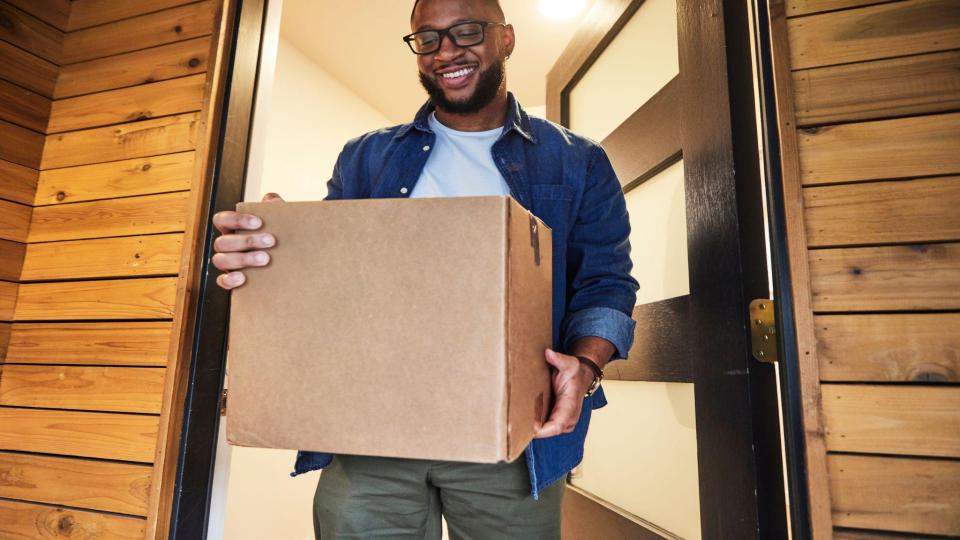
Residential delivery brings online orders to customers’ homes as part of the last-mile delivery journey. For e-commerce brands, it’s where the delivery promise lives or dies. The customer clicked “buy” days ago. Now the package either shows up at the right door, in one piece, when they expected it, or it doesn’t.
In Veho’s State of Delivery 2026 report, 45% of consumers said a poor delivery experience had ruined a vacation, special event, or holiday. But the same moment can work in a brand’s favor: 75% said a positive delivery experience makes them more likely to buy from that retailer again.
Getting that experience right requires accurate addresses, clear communication, and attention to the unique delivery needs of each location. For example, an apartment building with restricted entry presents different challenges from a house with an accessible front porch.
This guide explains what residential delivery means, how it works, and how businesses can create an exceptional delivery experience from checkout to doorstep and beyond.
What Is Residential Delivery?
Residential delivery is the transportation of goods to a home or residential address, including houses, apartments, condos, and home-based businesses. It includes everyday parcels, such as clothing and subscription boxes, as well as larger freight shipments, such as furniture and appliances.
The destination alone determines whether a delivery is residential. The size and handling requirements of the shipment determine how it gets there. A beauty subscription box may be left in an approved package location, while a sofa may require an appointment and equipment for unloading.
When Do Businesses Need Residential Delivery?
If you sell directly to consumers online, you need residential delivery. That’s true for direct-to-consumer (DTC) brands, business-to-consumer (B2C) companies, and any business whose customers would rather have their purchases show up at home than pick them up. Apparel, wellness products, recurring subscriptions, and meal kits are the usual examples, but the list keeps growing as more categories move online.
Residential delivery is also a growth lever. Offering it opens the door to customers who can’t or won’t visit a store or a pickup point, like busy parents, people in rural areas, and shoppers who simply value convenience. It can also deepen your relationship with the customers you already have. Subscriptions and replenishment programs depend on dependable doorstep delivery, and every smooth order makes the next one more likely. Brands that make home delivery easy tend to earn more repeat purchases, larger baskets, and a wider geographic reach.
Choosing the right delivery option starts with understanding both what you’re shipping and where it’s going. Get that match right, and residential delivery stops being just a cost of doing business and becomes a way to reach new customers and keep the ones you have.
Why Does Residential Delivery Matter?
Residential delivery is important, because for most online shoppers, it’s the part of the experience they actually touch. Your site, your ads, and your product photos make the promise. The doorstep is where you keep it.
That makes residential delivery matter in a few ways:
- It shapes customer loyalty. A package that arrives on time and in good condition quietly builds trust. One that’s late, damaged, or left in the wrong spot sends customers looking elsewhere, and they often remember it longer than they remember the discount that got them to buy.
- It influences the purchase itself. Shoppers weigh delivery speed, cost, and reliability before they check out. Clear, dependable home delivery options can be the difference between a completed order and an abandoned cart. In fact, 56% of online shoppers have abandoned a purchase because the delivery options didn’t meet their needs.
- It expands who you can reach. Offering strong residential delivery lets you serve customers well beyond your immediate area, including people who live far from a store or pickup point or simply prefer to stay home.
- It affects your bottom line. Residential deliveries often cost more than business deliveries, so failed attempts, redeliveries, and damage claims add up fast. Getting it right the first time protects your margins as much as your reputation.
Residential delivery isn’t just the last step of the order. It’s often the step that decides whether there’s a next one.
Residential vs. Commercial Delivery: What’s the Difference?
Residential delivery serves home addresses, while commercial delivery serves business premises. That distinction affects how drivers access the property and complete the handoff.
Delivery arrangements vary by property. An apartment building may have a staffed package room, while a small business may have no dedicated receiving area. Businesses should work with their delivery networks to allow recipients to provide access and delivery instructions to reduce missed deliveries and improve the overall experience.
How Does Residential Delivery Work?
The exact process varies by shipping partner and shipment type, but residential parcel delivery generally follows five steps.
- The customer places an order. The business collects the delivery address, contact information, and any relevant preferences. Apartment numbers and access details help prevent problems later.
- The business prepares the shipment. The order is picked, packed, labeled, and handed to a shipping partner. Suitable packaging protects the contents throughout transportation and the final handoff.
- The package reaches a local facility. After moving through the transportation network, it is sorted for the delivery area and assigned to a route.
- The driver completes the delivery. The driver follows applicable access instructions and receiving requirements, either handing over the package or placing it in an approved location.
- The customer receives confirmation. A delivery status update, photo, or other proof of delivery confirms completion and may help the customer locate the package.
Key Types of Residential Delivery
Residential delivery options differ according to shipment size, handling needs, and the level of assistance required.
Parcel Delivery
Parcel delivery covers individual packages that can be handled without specialized freight equipment. Depending on the service and property, packages may be delivered to a doorstep, package room, or designated location, or handed directly to the recipient. Some shipments require a signature.
Curbside Freight Delivery
Curbside delivery typically involves unloading larger goods near the curb or driveway. A liftgate may be needed to lower the shipment from the vehicle. The recipient generally handles moving the goods from the drop-off point into the home.
Inside Delivery and White-Glove Options
Inside delivery moves goods beyond the exterior drop-off point to a location defined by the service. White-glove options may include additional assistance, such as room placement, assembly, or packaging removal. The exact services included vary by shipping partner.
Delivery Appointments
Large shipments may require a scheduled appointment so someone is available to receive them. Appointment arrangements typically include a delivery window and confirmation of property access or unloading requirements.
Benefits of an Effective Residential Delivery Shipping Partner
The right shipping partner helps businesses keep delivery promises and makes receiving an order easier for customers. Those improvements can also reduce support demand and strengthen the customer’s relationship with the brand.
Benefit #1: More Dependable Deliveries
Customers rely on orders arriving when promised, particularly for recurring subscriptions or time-sensitive purchases. For example, speed still matters to 95% of shoppers, but 92% say a consistent delivery experience matters, too. Accurate routing and clear access instructions help prevent avoidable delays and unsuccessful delivery attempts.
Benefit #2: Greater Convenience for Customers
Receiving an order at home saves customers a separate trip to collect it. Clear arrival updates make planning easier, while attention to delivery instructions helps packages reach the appropriate doorstep, package room, or designated location.
Benefit #3: Fewer Delivery-Related Support Inquiries
“Where is my order?” questions are easier to avoid when customers can check their package’s progress and see confirmation after it arrives. If a problem does occur, tracking records and delivery photos give support teams useful details to investigate and respond.
Benefit #4: Stronger Customer Trust and Loyalty
A purchase doesn’t feel complete until it reaches the customer. An order that arrives as promised reinforces the confidence built during shopping and checkout. A dependable delivery experience gives customers another reason to return to the brand.
Common Residential Delivery Challenges
Reaching the correct street address is only part of a successful home delivery. Drivers may still need to locate a unit, enter a secured building, or find an appropriate place for the package.
Challenge #1: Incomplete or Incorrect Addresses
A package can reach the right building and still be undeliverable if the apartment number is missing. Incorrect street names, ZIP codes, or unit details can also lead to delays or delivery to the wrong address.
Challenge #2: Apartment and Gated Property Access
Locked entrances and gated communities create obstacles when entry codes are missing or outdated. Some buildings also restrict delivery hours or require packages to go through a designated receiving area. Without those details, a driver may be unable to reach the drop-off location.
Challenge #3: Missed Deliveries and Unclear Package Placement
Deliveries requiring a signature may need another attempt if the recipient is unavailable. For packages that can be left unattended, finding a suitable location presents a different challenge. A completed delivery can still leave the customer searching if the package is placed somewhere unexpected without clear confirmation.
Challenge #4: Delays and Gaps in Communication
Traffic, severe weather, and shipment disruptions can push delivery beyond the expected arrival time. The uncertainty becomes more frustrating when tracking remains unchanged or offers no explanation. Customers may be left unsure whether to keep waiting, contact support, or make other arrangements.
Residential Delivery Technology and Innovation
Delivery technology helps teams address these challenges by organizing routes, making access instructions available to drivers, and keeping customers informed as their packages move toward home.
Residential Delivery Innovation #1: Route Planning and Optimization
Planning a delivery route involves more than finding the shortest distance between stops. Route optimization tools consider locations, expected travel times, and shipment requirements to organize deliveries. Systems that support dynamic routing can also adjust plans as conditions change.
Residential Delivery Innovation #2: Address Validation and Delivery Guidance
Before a package ships, address validation can flag missing or inconsistent details that need correction. At the destination, drivers need information that a street address alone may not provide: an entry code, the location of a package room, or instructions for finding a particular unit. Delivery guidance tools make those details available during the handoff.
Residential Delivery Innovation #3: Shipment Tracking and Proactive Notifications
Customers can follow an order’s progress through shipment tracking, while proactive notifications bring important updates directly to them. An approaching delivery, a delay, or a completed drop-off can each trigger a message. When action is needed, such as providing access instructions, the notification can explain the next step.
Residential Delivery Innovation #4: Digital Confirmation and Photo Proof of Delivery
A delivery photo can help a customer recognize where a package was left, especially at properties with several possible drop-off locations. Combined with a timestamp and delivery status, it also gives support teams a record to review if the customer cannot find the order.
How E-Commerce Businesses Can Improve Residential Delivery
Improving residential delivery starts before a package leaves the warehouse. Effective e-commerce delivery management ensures that details collected at checkout reach the delivery team and that customers receive clear updates and support throughout the journey.
Collect Complete Addresses and Delivery Instructions
At checkout, clearly label apartment and unit fields so customers don’t overlook them. Include space for access details and package placement preferences, then confirm that your shipping partner can receive and use those instructions.
Set Realistic Delivery Expectations
An estimated arrival date gives customers a clearer expectation than a shipping-speed label alone. According to Baymard Institute’s research on shipping speed vs. delivery date, shipping-speed labels leave shoppers to calculate when their orders will arrive.
Account for order processing, cutoff times, and the selected shipping service when building estimates. Keep delivery dates consistent across checkout, confirmation emails, and tracking updates, revising them if plans change.
Keep Customers Informed When Plans Change
When a delivery is delayed, share a revised estimate as soon as one is available. If completing the delivery requires customer input, explain exactly what is needed. For example, a message about a locked entrance can ask the customer to provide an updated entry code. Customers notice the difference: 90% of shoppers say they’re willing to pay more for delivery experiences that keep them informed, adapt when plans change, and arrive when they’re needed.
Make Delivery Problems Easy to Resolve
Customers shouldn’t have to search for help when an order is missing, delayed, or left in the wrong location. Make support contact details easy to find in tracking messages and delivery confirmations. Give support teams access to shipment records and proof of delivery so they can investigate with the shipping partner.
Monitor Delivery Performance and Customer Feedback
Track on-time delivery, first-attempt success, delivery exceptions, and related support inquiries. Reviewing results by area or property type can reveal recurring problems, such as access issues at particular apartment buildings.
Review customer feedback alongside those records. A package marked delivered may still have been difficult to locate, and a completed shipment won’t tell you whether its notifications were clear.
Residential Delivery Examples
Veho’s customer case studies show how home delivery can benefit from better instructions, visibility, and communication.
Residential Delivery Example #1: Tuckernuck and Veho
Lifestyle retailer Tuckernuck wanted to give customers greater visibility into their orders and make the delivery experience easier to navigate.
By partnering with Veho, Tuckernuck introduced real-time tracking, flexible delivery options, and proactive text updates. Customers also highlighted drivers’ attention to delivery instructions and follow-through to the door. With Veho, Tuckernuck achieved 24% fewer tracking questions and 19% fewer overall shipping inquiries.
For e-commerce brands, this example shows how delivery visibility and execution work together. Updates help customers follow their orders, while clear instructions help drivers complete the handoff at the right location. Together, these capabilities can make home delivery more reassuring and reduce the need to contact support.
Residential Delivery Example #2: Sakara and Veho
Wellness brand Sakara delivers nutrition products directly to customers’ homes, making reliable arrival and clear communication central to its customer experience.
Through its partnership with Veho, Sakara gave customers delivery time frames, a way to share instructions through SMS, and delivery photos sent by text. By the fifth month of the partnership, Veho reported on-time delivery improving from 92% to 99% and delivery errors falling by 40% compared with Sakara’s previous shipping partner.
The example highlights the practical value of connecting customer instructions with delivery confirmation. Instructions help drivers navigate each property’s requirements, while photos help customers locate their orders after arrival. For recurring home deliveries, these details can support a more consistent experience from one shipment to the next.
What to Look for in a Residential Delivery Shipping Partner
Choose a shipping partner that can meet your delivery requirements and the expectations you set for customers. Key areas to evaluate include:
- Delivery options: Can customers choose from different speeds and options? Two-thirds of shoppers (67%) say they want that flexibility.
- Coverage: Does the delivery network reach the areas where your customers live?
- Package and volume requirements: Can it handle your package sizes, order volume, and any special handling needs?
- Reliability: Can its delivery performance support the arrival dates you promise at checkout?
- Tracking and confirmation: What information can customers and support teams access before and after delivery?
- Delivery instructions: How are access details and package placement preferences shared with drivers?
- Issue resolution: What happens when a driver cannot access a property, complete a delivery, or locate a reported missing package?
Before committing, ask for performance data and walk through how common delivery problems are handled.
Make Residential Delivery Part of a Better Customer Experience
Residential delivery is where a brand’s promises become physical: the right box, at the right door, at the moment the customer expects it. Do that consistently, and delivery stops being a line item and starts working as a growth channel, one that earns trust, invites the next order, and opens the door to customers a brand couldn’t reach before.
The right shipping partner helps make your post-purchase experience a competitive advantage. Explore Veho’s Ground Plus Suite to see how a delivery network built around the residential experience can fit your shipment destinations and the expectations you set at checkout.
If you’re ready to learn more, contact Veho.