.svg)

.png)
Ecommerce shoppers have expectations that traditional shipping models were never designed to meet.
Today's consumers demand last-mile delivery experiences that are fast, transparent, flexible, and tailored to their needs. They want reliable delivery promises, real-time visibility, personalized delivery options, and confidence that their package will arrive on time.
Those expectations directly influence where they choose to shop.
- 75% say a positive delivery experience makes them more likely to shop with a retailer again
- 56% say they've prioritized certain retailers because of a good delivery experience in the past.
The problem is that most parcel networks were built for B2B deliveries. As customer expectations have evolved, many last-mile delivery networks have struggled to keep up.
While traditional networks optimize in bulk, dynamic orchestration optimizes at the package level, continuously determining the most efficient path for each package based on real-time network conditions, available capacity, and promised deliveries.
Package intelligence makes it possible to deliver the speed, flexibility, visibility, and reliability consumers expect without forcing brands to choose between cost, efficiency, and customer experience.
Here's why traditional last-mile delivery networks struggle to meet modern ecommerce expectations — and how AI-powered orchestration enables a more flexible delivery model that adapts to each package, customer, and delivery promise.
Why Traditional Delivery Networks Struggle to Optimize For Ecommerce Deliveries
Most parcel networks were designed to support static operational planning — not real-time orchestration. As ecommerce complexity has grown, those rigid delivery models have created inefficiencies across transportation, routing, facility operations, and network utilization.
Rigid Routing Increases Cost and Overhead
Traditional parcel networks were built around static transportation flows. Once a package enters the network, it often follows a predetermined path with limited ability to dynamically reroute based on available capacity, downstream congestion, trailer utilization, or changing delivery timelines.
Those inefficiencies ripple through the entire delivery experience. Brands absorb higher costs to move packages through the network, while consumers are more likely to encounter delays, missed expectations, and inconsistent delivery experiences.
Fragmented Volume Adds Operational Overhead
Traditional last-mile delivery networks often require packages to be separated by service level before they ever enter the network. Brands must pre-sort shipments into different transportation streams, while parcel providers move those shipments through separate networks designed around fixed service tiers.
The result is fragmented volume, underutilized transportation capacity, and additional operational complexity. Brands take on extra labor, software, workflows, and dock operations to support multiple shipping speeds, while parcel providers lose opportunities to consolidate freight, maximize trailer utilization, and balance urgent and flexible shipments together.
For brands, these inefficiencies drive up transportation and fulfillment costs. For consumers, they limit a retailer's ability to offer more flexible delivery options without increasing costs elsewhere.
Ecommerce Volatility Strains Traditional Networks
Most parcel networks were designed around predictable freight patterns. Ecommerce demand is anything but predictable — fluctuating around promotions, holidays, weather events, viral products, and shifting consumer behavior.
Without the ability to dynamically rebalance volume in real time, parcel networks often compensate with operational buffers, rigid cutoffs, and less efficient network planning that can increase costs for brands and make delivery experiences less customizable for consumers.
Excessive Handoffs Increase Delivery Risk
Without dynamic optimization, packages often move through more facilities, scans, and operational handoffs than necessary before reaching the customer.
Every additional touchpoint introduces more opportunities for delays, damage, and misroutes — increasing both delivery risk and cost for brands.
The Operational Cost of Traditional Delivery Models
To work within rigid delivery networks, brands are often forced to make tradeoffs between speed, cost, and operational efficiency. Those tradeoffs don't just affect operations. They ultimately shape the delivery experience customers receive.
Many brands default to a single shipping speed across most orders — not because it’s optimal, but because supporting more flexibility introduces too much overhead.
At the same time, brands frequently absorb additional costs inside their own facilities through pre-sortation labor, software, dock workflows, and operational planning required to support multiple service levels. What should be solved within the network often becomes the brand’s responsibility instead.
Maestro AI by Veho™: The Future of Delivery Optimization
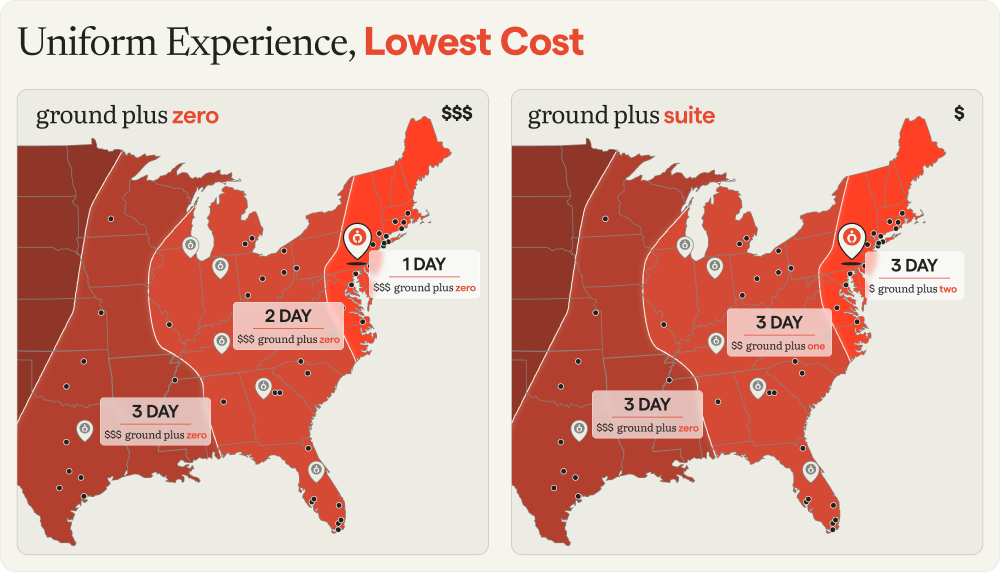
Veho’s AI-powered orchestration layer is what makes flexible delivery possible, helping brands improve operational efficiency while delivering the speed, flexibility, and reliability consumers expect. With Maestro AI by Veho™, brands can send Veho fully mixed volume without separate pickups, pre-sortation requirements, or operational workflow changes.
Behind the scenes, Maestro AI by Veho™intelligently routes each package through the network based on real-time conditions while preserving the promised last-mile delivery experience — enabling the right speed for every order, moving together within the same network.
Choose a More Flexible, Efficient Delivery Network
Modern ecommerce delivery requires more than static transportation planning and rigid service levels. Brands need a parcel partner that can dynamically adapt in real time — without adding operational complexity inside a brand’s facilities.
Veho empowers brands to move beyond traditional delivery tradeoffs — enabling more flexible service levels, fully mixed volume, and package-level optimization within the same network. Talk with a Veho specialist to learn how dynamic orchestration can help improve operational efficiency across your delivery strategy.