.svg)



.svg)

.png)
The future of transportation rarely arrives the way people imagine it will.
It does not always look like flying cars or trafficless cities, though we can dream. Sometimes, it looks like a tractor moving through a cornfield without a driver. A robotaxi picking up a passenger on a crowded city street, navigating conditions that would challenge even the most confident driver. A freight truck learning how to move safely from one facility to another, then eventually beyond the highway and closer to the customer.
That is the era logistics is entering now.
AI is beginning to move beyond the dashboards, forecasts, and workflow automation. It is starting to reshape the physical supply chain: how goods move, how trucks are utilized, how capacity is planned, and how brands think about speed, cost, and reliability.
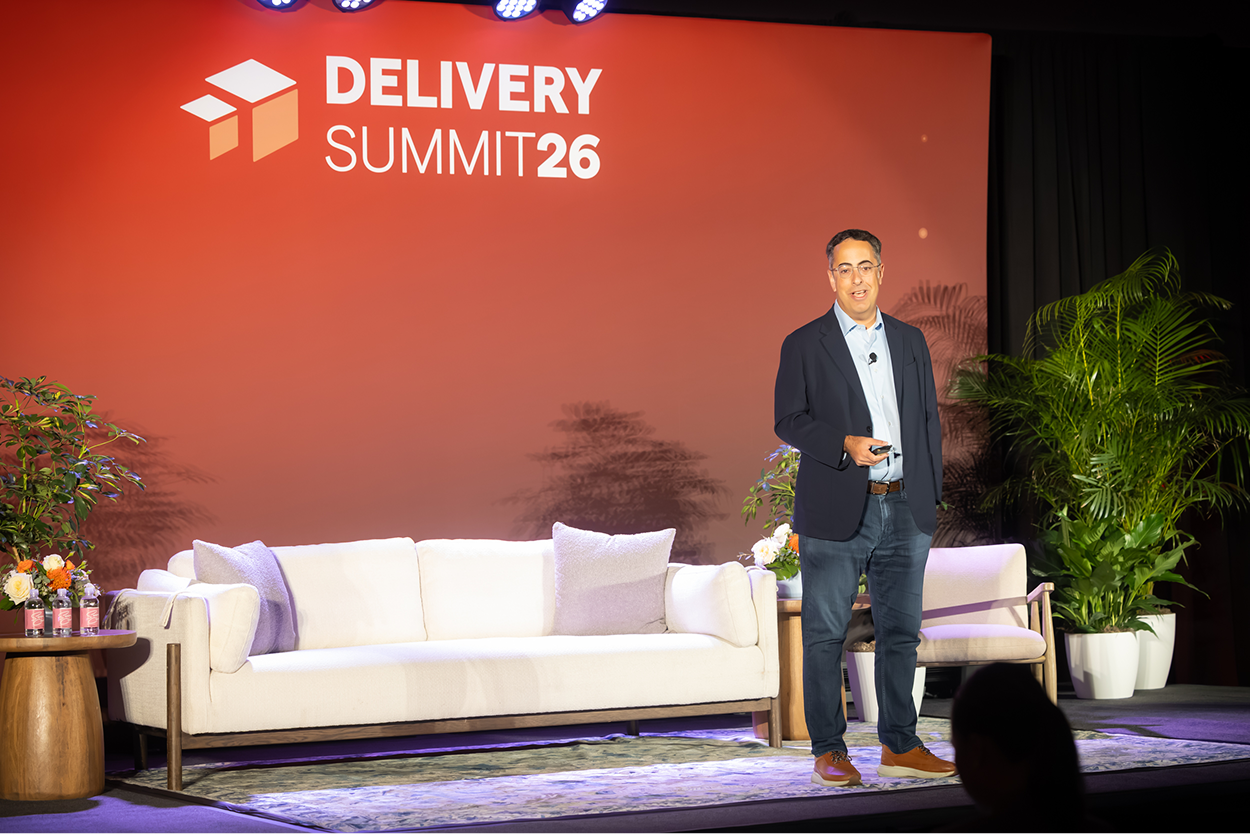
At The Veho Delivery Summit, Lior Ron, Chief Operating Officer at Waabi, explained how advances in AI, simulation, and autonomous-ready hardware are bringing large-scale autonomous freight closer to reality. For years, high hardware costs, immature AI models, and limited real-world performance kept autonomous freight from scaling. Today, those barriers are beginning to fall.
For ecommerce brands, the implications are significant. Autonomous logistics could unlock new levels of efficiency and utilization, but the bigger opportunity is a smarter delivery network: one that helps brands ship with more confidence, adapt faster, and deliver better customer experiences.
Here's what supply chain leaders should understand now about AI in logistics, autonomy, and the future of ecommerce delivery.
The Evolution of AI in Logistics
AI is not changing logistics in one dramatic leap. It’s advancing in waves, each one moving the industry closer to a supply chain that is more intelligent, more adaptive, and eventually more autonomous.
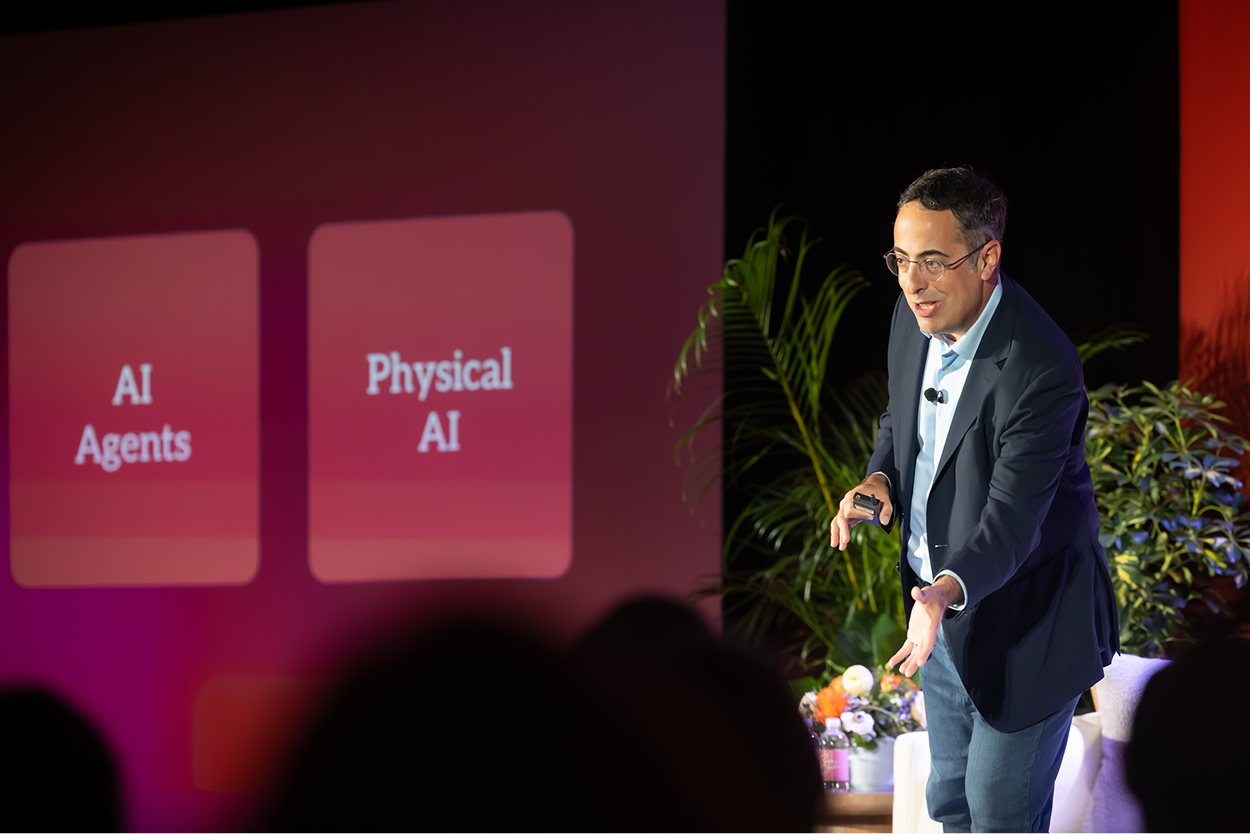
The first wave made logistics digital. The second is making logistics teams faster and more effective through AI agents. The next wave will move AI out of the back office and into the physical world, changing how goods actually move.
That distinction matters. Logistics has always been both a data problem and a physical one: every shipment depends on decisions about capacity, routing, timing, labor, cost, and customer expectations. AI is beginning to improve those decisions at every level, from the workflows teams manage to the trucks, facilities, and networks that move products across the country.
For ecommerce brands, this is where the story gets bigger. AI in logistics is not just about doing the same work faster. It is about building smarter delivery networks that can help brands make better promises, adapt when conditions change, and deliver with more confidence.
First, Logistics Became Digital
The first wave of AI in logistics was about bringing the supply chain online: connecting fragmented systems, reducing manual work, and using data to make operations more efficient.
For years, logistics teams were often managing complexity through manual processes, disconnected tools, and decisions made with incomplete visibility. A shipment might move through the network, but the data around that shipment did not always move as cleanly with it.
Digitization began to change that. Packages became easier to track. Exceptions could be flagged faster. Teams could see patterns across routes, facilities, and performance. Machine learning helped operators make better decisions, reduce cost, and improve outcomes across the supply chain.
Digitization made logistics more visible, more connected, and more measurable. But the goods still moved through the same physical constraints. The next leap is changing the movement itself.
As Lior Ron explained at the Veho Delivery Summit, the last decade was largely about taking analog processes and applying digital tools, cloud platforms, machine learning, and automation to reduce cost and improve outcomes.
Now, AI Agents Are Changing How Teams Operate
We are living in the second wave.
AI is no longer just helping teams see the network more clearly. It is beginning to help them act inside it.
That matters because so much of logistics happens in the messy middle: a delayed shipment, a missed scan, a customer asking where an order is, a route that needs to be adjusted, a facility constraint that changes the plan. These are the moments where speed, context, and judgment determine whether a small exception becomes a bigger customer experience problem.
AI agents are starting to support that work. They can triage issues, summarize context, route tasks, draft responses, flag exceptions, and help operators make faster decisions with better information. In one study of more than 5,000 customer support agents, access to a generative AI assistant increased productivity by about 14% on average, with the largest gains among less-experienced workers.
In logistics, the impact is becoming tangible. Ron pointed to his experience at Uber Freight, where the team built roughly 85 internal agents across standard operating procedures and operator workflows, helping reduce operating expenses by about 30%. Uber Freight has also publicly launched more than 30 AI agents designed to automate execution across the shipment lifecycle, with real-time recommendations to help shippers navigate disruption, reduce cost, and improve service.This is the shift from insight to action. AI is not just surfacing what happened. It is helping teams decide what to do next.
But the goods themselves still move through the same physical network. The next wave goes deeper: AI begins to change the movement itself.
Next, physical AI changes how goods move
The third wave is where AI leaves the screen.
Instead of only helping teams plan, coordinate, and respond, AI begins to shape the physical movement of goods itself: autonomous trucks, intelligent warehouses, robotics, and eventually delivery systems that can operate with far less manual intervention.
As Ron put it at the Veho Delivery Summit, the most exciting opportunity is not just “touching the digital fabric on top.” It is going into the assets of the supply chain and automating them with physical AI.
That is a very different kind of transformation. A dashboard can help a team see a late shipment. An AI agent can help decide what to do about it. Physical AI could eventually change how the shipment moves in the first place: which asset carries it, how long that asset can run, how capacity is used, and how quickly goods can move through the network.
For ecommerce brands, this is where the promise becomes more than operational efficiency. If trucks can run longer, routes can become more dynamic, and networks can respond with greater intelligence, brands gain new ways to balance speed, reliability, and cost.
And when that happens, logistics stops being only a constraint to manage. It becomes a system brands can design around the customer promise.
The Challenge With Scaling Autonomous Logistics
Autonomous logistics has always had a compelling promise: more capacity, better utilization, faster movement, and lower operating costs.
The challenge has been turning that promise into something that can operate safely and reliably inside the complexity of a real supply chain.
A freight truck does not move through a neat, predictable world. It moves through weather, traffic, construction, facility constraints, narrow turns, unpredictable drivers, and thousands of small edge cases that rarely show up the same way twice.
For years, autonomous systems struggled with that complexity. Early approaches were highly engineered and rules-based. They could solve for specific scenarios, but they were brittle. As Ron explained at the Veho Delivery Summit, “You fix something here, and nine other things break.”
More advanced AI introduced a different challenge. These systems could process more complexity, but they also raised questions around transparency, validation, and safety. If a system behaves like a black box, it becomes harder to prove how it will perform across millions of possible scenarios.
That is the barrier autonomy had to clear. Not interest from shippers. Not imagination from technologists. The hard part was building systems reliable enough, flexible enough, and cost-effective enough to operate inside the real supply chain.
Autonomous logistics has never lacked ambition. It has lacked the conditions to scale.
Now, those conditions are beginning to change.
Why Autonomous Logistics Is Finally Possible
According to Ron, three forces are converging at once: autonomous-ready hardware, more advanced AI models, and growing demand from shippers looking for smarter, more efficient logistics networks.
For years, each of those pieces was incomplete. The vehicles were not ready. The models were not mature enough. The economics were difficult to prove beyond narrow pilots. But the ecosystem is starting to catch up to the ambition.
1. The hardware is finally ready
Autonomous freight cannot scale on software alone. The truck itself has to be built for a driverless future, with redundant systems that can support safe operation without a human behind the wheel.
That has been one of the longest-running constraints. As Ron explained, autonomous-ready trucks and the broader OEM ecosystem are now becoming mature enough to support real deployment. Major manufacturers are producing vehicles with the redundancy, production infrastructure, and supplier support required to move autonomy out of isolated pilots and into repeatable logistics operations.
For supply chain leaders, that matters because autonomy cannot be a one-off experiment. It has to work across lanes, fleets, and operating conditions.
2. AI is becoming more capable and more verifiable
The second shift is the maturity of AI itself.
Earlier systems struggled because they were either too brittle or too opaque. They could not generalize well across real-world conditions, or they were difficult to validate with confidence.
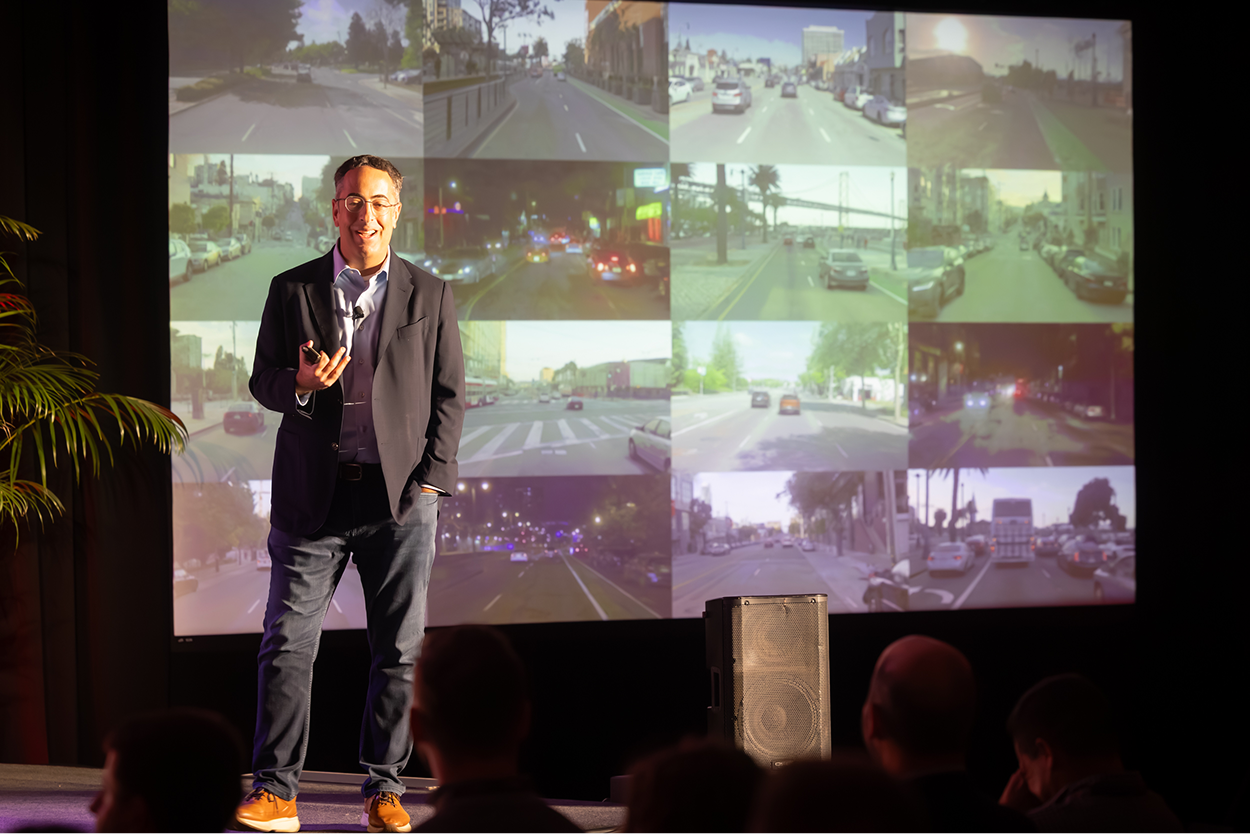
Simulation is helping close that gap. Ron pointed to Waabi’s simulator, which is designed to mirror real-world conditions closely enough to test autonomous systems against scenarios that would be impossible to recreate safely or repeatedly on the road. In the draft, Ron notes that when a truck runs 100,000 scenarios in the real world and in simulation, it ends up in the same place 99.7% of the time.
That is a major unlock. Logistics is full of edge cases: unusual turns, facility constraints, weather, traffic, and unpredictable human behavior. Simulation gives teams a way to train, test, and validate against those edge cases at scale.
3. Shipper demand is accelerating
The third force is demand.
Shippers are under pressure to improve capacity, reliability, speed, and cost performance, while customer expectations continue to rise. Brands need delivery networks that are not only cheaper to operate, but smarter, more resilient, and more adaptive.
That creates real market pull for autonomous freight. If autonomy can increase utilization, reduce operating constraints, and improve reliability on key lanes, it becomes more than a technology story. It becomes a business advantage.
The result is a meaningful shift: autonomous freight is moving from a future concept to a practical capability supply chain leaders need to understand now.
From Hub-to-Hub to Door-to-Door Autonomy
Even as autonomous freight becomes more viable, where it operates matters.
For years, much of the industry has focused on hub-to-hub autonomy: autonomous trucks moving between terminals, often along highway routes. That model can reduce some complexity, but it also creates handoffs. Freight still has to get to the hub, move from the hub to its final destination, and rely on human drivers or additional infrastructure on either end.
“Hub-to-hub doesn’t scale,” Ron says. It introduces added cost, complexity, and operational friction, requiring human drivers and infrastructure at both ends of the journey.
The real opportunity is extending autonomy beyond the highway.
“The value is meeting the customer where they are,” he explains. That means moving from controlled environments into surface streets, distribution centers, and delivery locations — handling the full journey from origin to destination.
Waabi has already begun demonstrating this capability. “For the first time, we’re not limited to hub-to-hub,” Ron says. “We can go from door to door through surface streets, into facilities, and complete the delivery end to end.”
For ecommerce brands, that distinction matters. A more flexible autonomous network could eventually make it easier to move goods through existing supply chains, reduce unnecessary handoffs, and improve the speed and reliability of key lanes.
Autonomy becomes most powerful when it fits into the way logistics actually works, not when logistics has to reorganize around autonomy.
What Comes Next: Scaling Autonomy Across the Network
The next phase of autonomous logistics is not just proving the technology works. It is scaling it across real lanes, fleets, and freight networks.
That shift is already beginning. Ron described autonomous systems moving closer to driverless deployment in Texas, with pilots running on major freight lanes like Dallas to Houston. He also pointed to early performance signals, including 100% on-time pickup and delivery and 99.6% autonomy in testing.
The larger unlock is utilization.
Human-driven freight is constrained by hours of service, driver availability, route timing, and handoffs across the network. Autonomous trucks could eventually run for longer periods, increasing utilization and opening up new operating models for long-haul freight.
That could change the shape of the network itself. Routes that once required multi-day moves could become faster. Relay models between distribution centers could become more continuous. Capacity could become more flexible on high-demand lanes.
For shippers, the implication is not simply that trucks may drive themselves. It is that the economics of certain lanes may begin to change. As autonomous capacity enters the market, early adopters may find new ways to improve speed, reliability, and cost performance in parts of the network where the technology fits best.
Autonomy will not transform every route at once. But it does not need to. Even targeted deployment on major freight corridors could begin to shift how supply chain leaders think about capacity, procurement, and partner strategy.
The brands that understand those shifts early will be better prepared to take advantage of them.
What This Means for Supply Chain Leaders
For supply chain leaders, the message is not to overhaul the network overnight. It is to start learning now.
Autonomous freight will not fit every lane, shipment, or operating model immediately. Early capacity will likely be concentrated in specific corridors where the technology, economics, and operating conditions make the most sense. But that is exactly why preparation matters.
The brands that move early will have more time to understand where autonomy can create value: which lanes are under the most pressure, where reliability matters most, where capacity is constrained, and where improved utilization could change the cost equation.
They will also be better equipped to ask the right questions of their logistics partners. Who is investing in smarter technology? Who can help the network become more adaptive over time? Who is simply moving packages, and who is helping the brand build a better delivery promise?
That distinction will become increasingly important. As AI reshapes logistics, the advantage will not go only to the companies with access to new technology. It will go to the teams that know how to apply it thoughtfully: to reduce waste, improve reliability, increase flexibility, and create better outcomes for customers.
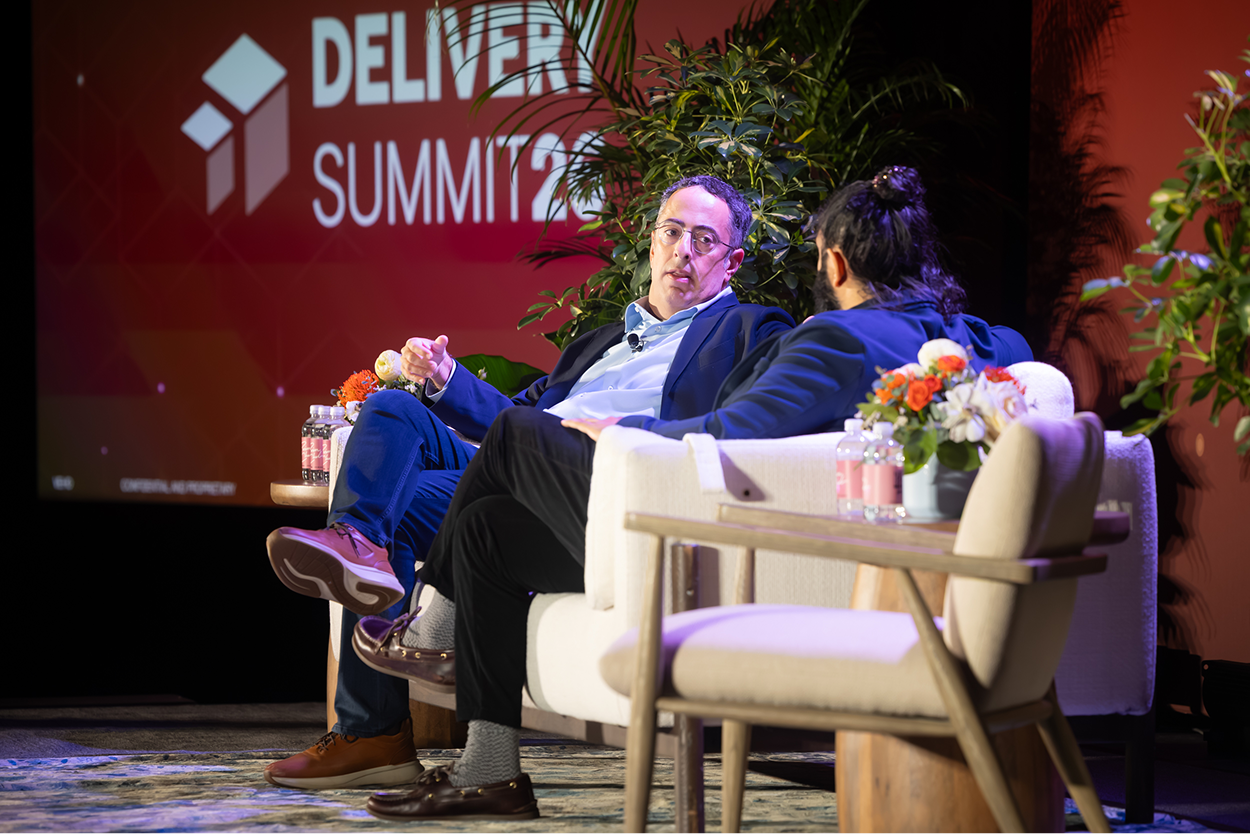
Ron’s advice was simple: at a minimum, seek to understand what is happening. For ecommerce brands, that means treating autonomy not as a distant innovation to watch from the sidelines, but as an emerging capability to evaluate, learn from, and prepare for.
The point is not to chase autonomy for its own sake. The point is to understand how a smarter logistics network could help brands ship better, promise better, and deliver better.
Build For the Autonomous Future of Logistics
Autonomous logistics is moving from theory to deployment, with real implications for how supply chains are designed, operated, and optimized.
But the bigger story is not simply that trucks may drive themselves. It is that logistics is becoming more intelligent. Networks will have more data, more automation, more adaptive capacity, and more ways to respond when conditions change.
For ecommerce brands, that creates an opportunity to think differently about delivery. Not just as a cost to reduce, but as a system to design: one that can support faster movement, smarter tradeoffs, more reliable promises, and better customer experiences.
Autonomy will not transform every lane overnight. But it will change what is possible. As new capacity enters the market, the brands that benefit most will be the ones that already understand where AI fits, which lanes matter most, and how smarter logistics can strengthen the customer promise.
The future of logistics will not be built by waiting for the technology to arrive fully formed. It will be built by the teams learning now, testing now, and asking better questions about how goods should move.
Because the goal is not just to automate delivery. It is to make delivery work better for brands, for operators, and for the customers waiting on the other end.
To hear more from Lior Ron on what’s ahead and how to prepare, watch the full session from The Veho Delivery Summit.